

The 4 Way Tilt Switch and Directions Sensor manufacture!
Shenzhen Chengshengxing Technology Co., Ltd. is a technology-driven manufacturing enterprise specializing in the research, development, and production of micro-vibration sensors, directional sensors, tilt switches, vibration switches, ball switches, and other related products. Our offerings find extensive application in automotive electronics, intelligent digital devices, smart wearables, household appliances, industrial automation, and other fields that require precise detection of vibrations, tilts, angles, or directions.
-
![4 Way Toggle Switch S04]() 4 Way Toggle Switch S04Vertical four-way tilt switch (normally closed). It is suitable for four-direction rotation detection in the vertical state of the PCB, as well as flip detection in the up, down, left, and right directions. It can also identify the tilt$ 0.22 read more
4 Way Toggle Switch S04Vertical four-way tilt switch (normally closed). It is suitable for four-direction rotation detection in the vertical state of the PCB, as well as flip detection in the up, down, left, and right directions. It can also identify the tilt$ 0.22 read more -
![Photoelectric Inclination Switch Stable And Reliable]() Photoelectric Inclination Switch Stable And ReliableThis series of photoelectric tilt switches features a normally open design. When the side with characters faces up, the switch remains in a stable, normally open, high-level state (OFF). When the switch tilts in any direction and reaches$ 0.50 read more
Photoelectric Inclination Switch Stable And ReliableThis series of photoelectric tilt switches features a normally open design. When the side with characters faces up, the switch remains in a stable, normally open, high-level state (OFF). When the switch tilts in any direction and reaches$ 0.50 read more


Why choose us
Advanced Technology
By innovatively utilizing new materials and processes, our company has become the world's pioneer in applying hardware coating technology to the manufacturing of sensor switches.
Independent Innovation
Through years of independent innovation and research and development, it has broken through the bottleneck of traditional technology.
Advanced Equipment
In response to the rapidly growing market demand, we have introduced and customized automation equipment across various production stages to enhance production management and quality control.
Brand Recognition
We have established ourselves as a preferred supplier of sensor switches for leading domestic brands such as Xiaomi and Midea. Moreover, we have successfully integrated into the supply chains of renowned international brands like Microsoft, Philips, and Bosch.
Photoelectric Inclination Switch Stable And Reliable
This series of photoelectric tilt switches features a normally open design. When the side with characters faces up, the switch remains in a stable, normally open, high-level state (OFF). When the switch tilts in any direction and reaches the switching angle, it outputs a low level to trigger the circuit to conduct (ON), thereby activating the MCU, I/O, or other control circuits.
|
Voltage |
0.5~2.4VDC |
|
Current |
2uA-10mA |
|
Closed resistance |
<30Ω |
|
Insulation resistance |
>10MΩ |
|
Temperature range Operating |
-40℃ to 80℃ |
Advantages of Tilt Switch
High accuracy:
Tilt sensors can provide highly accurate measurements of tilt angles with minimal errors. They can measure the angle of an object in any direction and provide a precise reading of its position.
Compact size:
Tilt sensors are small and lightweight, making them suitable for use in space-constrained applications. They can be integrated into a variety of systems and devices without adding significant weight or size.
Low power consumption:
Tilt sensors typically consume very little power, making them ideal for use in battery-powered or energy-efficient applications. They can operate for extended periods of time without the need for frequent battery replacements or recharging.
Wide range of applications:
Tilt sensors can be used in a variety of applications, including measuring the inclination of structures, monitoring the orientation of machinery, and controlling the movement of vehicles. They are also used in navigation, aviation, and aerospace industries.
Durability:
Tilt sensors are often designed to withstand harsh environmental conditions, such as extreme temperatures, moisture, and vibration. They are built to last and require minimal maintenance, making them reliable and cost-effective solutions.
Applications of Tilt Sensors
Construction Equipment: Construction outfit, including cranes, bulldozers, and excavators, constantly incorporates tilt sensors to guarantee precise alignment and avoid outfit capsizing.
Automotive Industry: Tilt sensors in buses are pivotal to stability control systems( similar electronic stability control) because they sense the vehicle's tilt and modify machine and retardation forces to keep the vehicle stable. Particularly when encircling.
Aerospace and Aviation: In airplane navigation, pitch, roll, and yaw angles are measured using tilt sensors. automation and control of flight During flight, it aids in preserving stability and the proper heading.
Marine Navigation: Watercraft navigation and stability are facilitated by tilt sensors. They prop in maintaining the balance and path of boats, vessels, and submarines. indeed when there are large swells in the water.
Robotics: In robotics, tilt sensors are employed for stir control and direction sensing. This enables the robot to walk across uneven terrain with effectiveness, maintain balance, and modify its posture.
Consumer Electronics: Tablets and smartphones can identify whether the screen is in portrayal or geography mode thanks to tilt sensors. In game controllers, they are also utilized for motion detection and gesture recognition.
Medical Devices: Medical devices like operating tables and patient beds have tilt sensors built in. This guarantees proper placement throughout the process. It supports preserving the safety and comfort of patients.
Geotechnical Monitoring: Geotechnical monitoring systems measure ground movements using tilt sensors. structural distortion and pitch stability in structures including islands, heads, and structures.
Oil and Gas Industry: On drilling equipages and oil platforms, tilt sensors are used to track the well's direction and inclination. It ensures safety and increases drilling efficiency.
Rail Transportation: Trains and rail systems are equipped with tilt sensors for tilt monitoring and stabilization. It contributes to stability and safety, particularly when navigating curves quickly.
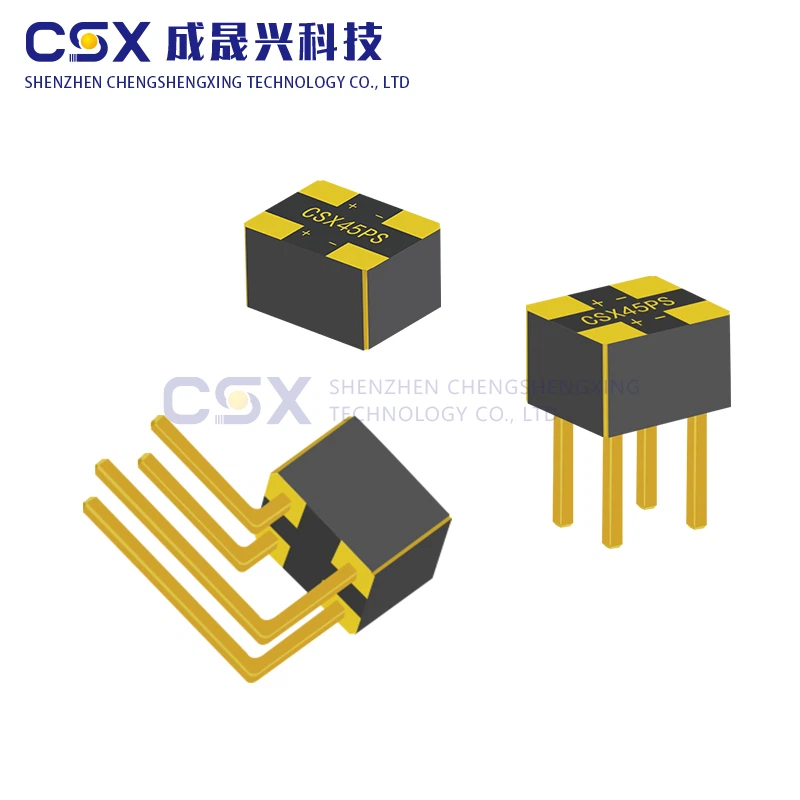
4 Way Toggle Switch S04
Vertical four-way tilt switch (normally closed)
It is suitable for four-direction rotation detection in the vertical state of the PCB, as well as flip detection in the up, down, left, and right directions. It can also identify the tilt angle in a single direction.
|
Voltage |
0.5~2.4VDC |
|
Current |
2uA-10mA |
|
Closed resistance |
<30Ω |
|
Insulation resistance |
>10MΩ |
|
Temperature range Operating |
-40℃ to 80℃ |


Simple Operation: They're easy to understand and operate. Users can quickly flip the lever to turn a device on or off.
Durability: They're often durable and can withstand a significant number of switching cycles. This makes them suitable for applications where frequent switching is required.
Cost-Effective: They're typically cost-effective to manufacture, making them a budget-friendly option for various applications.
Versatility: They come in various sizes and configurations, allowing for versatility in design and application. They are available in single-pole/single-throw (SPST), single-pole/double-throw (SPDT) and double-pole/double-throw (DPDT) configurations, among others.
Mechanical Feedback: The physical movement of the toggle lever provides users with a tactile feel, giving them feedback about the switch's state.
Types of 4-Way Switches
Rocker:
A rocker light switch has a flat, smooth face that turns on and off by pressing (or rocking) it on the top or the bottom. A rocker light switch can be lighted, for easier viewing and access.
Toggle switch:
A toggle switch has a lever that flips up or down to turn the light on or off. It's a classic, simple light switch that rarely fails.
Push button:
A push-button switch turns on or off when the button is pushed in or out. A popular variation of a push button switch is the rotary-style dimmer dial. This switch turns on and off by pushing the button, but it can also be rotated to increase or decrease the brightness of the lights.
Applications of 4 Way Toggle Switch
Toggles switches are used as switching circuits within industrial, commercial equipment & telecommunication.
These switches are used in switching headlights, logic-level applications, vehicles, and control panels of airplanes. etc.
It can be used as the main switch for AC & industrial equipment like conveyors, packaging machines, etc.
These switches can be found in commercial, domestic & industrial power points.
These are used in many electrical and industrial devices like conveyor belts, and residual current devices (RCDs).
These switches allow the car drivers to quickly access indicator lights, similar controls & headlights.
Our factory
In 2008, the company was established with a strong entry into the sensing switch industry. In the same year, it launched the first micro patch vibration sensing switch, breaking the industry monopoly in Europe, America, and Taiwan.

FAQ
We're professional 4 way tilt switch and directions sensor manufacturers and suppliers in China, specialized in providing high quality customized service. We warmly welcome you to buy bulk 4 way tilt switch and directions sensor in stock here from our factory. Contact us for quotation.
4 Way Toggle Switch-
![Tilt Protection Switch CSX-SEN-645B]() Tilt Protection Switch CSX-SEN-645BWhen the switch is perpendicular to the ground, it remains in a stable normally open state (OFF). When the switch tiltsread more
Tilt Protection Switch CSX-SEN-645BWhen the switch is perpendicular to the ground, it remains in a stable normally open state (OFF). When the switch tiltsread more -
![Inductive Sensor Impact Detection CSX-SEN-360T-30]() Inductive Sensor Impact Detection CSX-SEN-360T-30When the switch is soldered above the PCB and in a horizontal position, it remains stable in the normally open stateread more
Inductive Sensor Impact Detection CSX-SEN-360T-30When the switch is soldered above the PCB and in a horizontal position, it remains stable in the normally open stateread more -
![Angle Switch Sensors CSX45]() Angle Switch Sensors CSX45When the character side of the switch is facing up and in a horizontal position, the switch remains in a stableread more
Angle Switch Sensors CSX45When the character side of the switch is facing up and in a horizontal position, the switch remains in a stableread more -
![Car Alarm Shock Sensor CSX-SEN-180A]() Car Alarm Shock Sensor CSX-SEN-180AThis series of vibration sensors is designed purely mechanically and does not require current consumption duringread more
Car Alarm Shock Sensor CSX-SEN-180AThis series of vibration sensors is designed purely mechanically and does not require current consumption duringread more -
![Contact Ball Sensor BT45]() Contact Ball Sensor BT45This series of tilt switches is designed to be normally closed. When the character side of the switch is facing upwardsread more
Contact Ball Sensor BT45This series of tilt switches is designed to be normally closed. When the character side of the switch is facing upwardsread more -
![Vibration Transmitter Strike Detection CSX-SEN-300A]() Vibration Transmitter Strike Detection CSX-SEN-300AThis series of vibration sensors is designed purely mechanically and does not require current consumption duringread more
Vibration Transmitter Strike Detection CSX-SEN-300AThis series of vibration sensors is designed purely mechanically and does not require current consumption duringread more


