

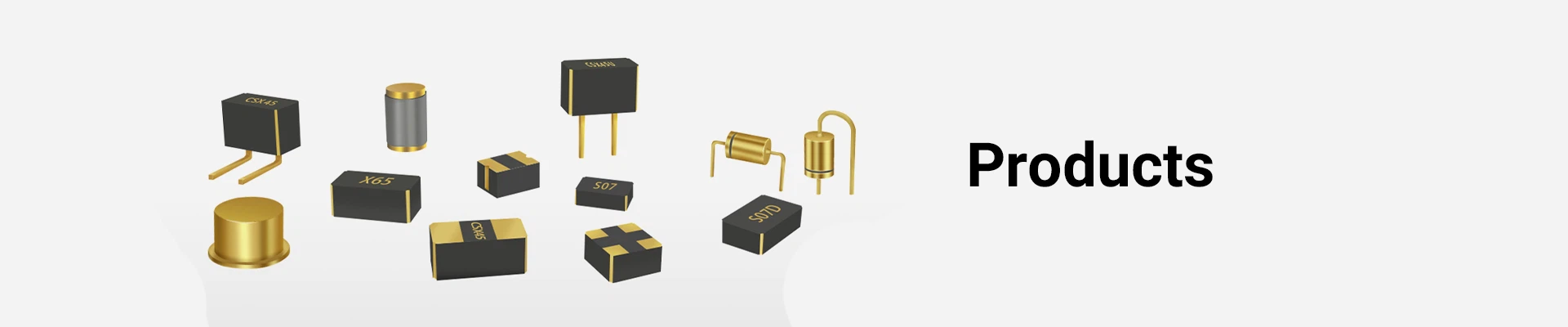
Shenzhen Chengshengxing Technology Co., Ltd. is a technology-driven manufacturing enterprise specializing in the research, development, and production of micro-vibration sensors, directional sensors, tilt switches, vibration switches, ball switches, and other related products. Our offerings find extensive application in automotive electronics, intelligent digital devices, smart wearables, household appliances, industrial automation, and other fields that require precise detection of vibrations, tilts, angles, or directions.
Advanced Technology
By innovatively utilizing new materials and processes, our company has become the world's pioneer in applying hardware coating technology to the manufacturing of sensor switches.
Advanced Equipment
In response to the rapidly growing market demand, we have introduced and customized automation equipment across various production stages to enhance production management and quality control.
Brand Recognition
We have established ourselves as a preferred supplier of sensor switches for leading domestic brands such as Xiaomi and Midea. Moreover, we have successfully integrated into the supply chains of renowned international brands like Microsoft, Philips, and Bosch.
Independent Innovation
Through years of independent innovation and research and development, it has broken through the bottleneck of traditional technology.
-
![Car Alarm Shock Sensor CSX-SEN-180A]() Car Alarm Shock Sensor CSX-SEN-180AThis series of vibration sensors is designed purely mechanically and does not require current consumption during operation. It detects changes in the environment through voltage changes output by two gold-plated rolling balls inside, and$ 0.24 read more
Car Alarm Shock Sensor CSX-SEN-180AThis series of vibration sensors is designed purely mechanically and does not require current consumption during operation. It detects changes in the environment through voltage changes output by two gold-plated rolling balls inside, and$ 0.24 read more -
![Vibration Transmitter Strike Detection CSX-SEN-300A]() Vibration Transmitter Strike Detection CSX-SEN-300AThis series of vibration sensors is designed purely mechanically and does not require current consumption during operation. It detects changes in the environment through voltage changes output by two gold-plated rolling balls inside, and$ 0.24 read more
Vibration Transmitter Strike Detection CSX-SEN-300AThis series of vibration sensors is designed purely mechanically and does not require current consumption during operation. It detects changes in the environment through voltage changes output by two gold-plated rolling balls inside, and$ 0.24 read more -
![Vibration Displacement Sensor CSX-SEN-S08]() Vibration Displacement Sensor CSX-SEN-S08This series of vibration switches is designed purely mechanically and does not require current consumption during operation. When the internal gold-plated rolling ball detects vibration or displacement in the environment, the switch will$ 0.13 read more
Vibration Displacement Sensor CSX-SEN-S08This series of vibration switches is designed purely mechanically and does not require current consumption during operation. When the internal gold-plated rolling ball detects vibration or displacement in the environment, the switch will$ 0.13 read more -
![Motion Displacement Detection CSX-SEN-S02]() Motion Displacement Detection CSX-SEN-S02This series of vibration switches is designed purely mechanically and does not require current consumption during operation. When the internal gold-plated rolling ball detects vibration or displacement in the environment, the switch will$ 0.15 read more
Motion Displacement Detection CSX-SEN-S02This series of vibration switches is designed purely mechanically and does not require current consumption during operation. When the internal gold-plated rolling ball detects vibration or displacement in the environment, the switch will$ 0.15 read more -
![Vibration Switch Industrial CSX-SEN-S06]() Vibration Switch Industrial CSX-SEN-S06This series of vibration switches is designed purely mechanically and does not require current consumption during operation. When the internal gold-plated rolling ball detects vibration or displacement in the environment, the switch will$ 0.16 read more
Vibration Switch Industrial CSX-SEN-S06This series of vibration switches is designed purely mechanically and does not require current consumption during operation. When the internal gold-plated rolling ball detects vibration or displacement in the environment, the switch will$ 0.16 read more -
![Shake Switch CSX-SEN-200A]() Shake Switch CSX-SEN-200AThis series of vibration sensors is designed purely mechanically and does not require current consumption during operation. It detects changes in the environment through voltage changes output by two gold-plated rolling balls inside, and$ 0.24 read more
Shake Switch CSX-SEN-200AThis series of vibration sensors is designed purely mechanically and does not require current consumption during operation. It detects changes in the environment through voltage changes output by two gold-plated rolling balls inside, and$ 0.24 read more -
![Smd Vibration Sensor CSX-SEN-S180]() Smd Vibration Sensor CSX-SEN-S180This series of vibration sensors is designed purely mechanically and does not require current consumption during operation. It detects changes in the environment through voltage changes output by two gold-plated rolling balls inside, and$ 0.24 read more
Smd Vibration Sensor CSX-SEN-S180This series of vibration sensors is designed purely mechanically and does not require current consumption during operation. It detects changes in the environment through voltage changes output by two gold-plated rolling balls inside, and$ 0.24 read more


|
Voltage |
0.5~2.4VDC |
|
Current |
2uA-10mA |
|
Closed resistance |
<30Ω |
|
Insulation resistance |
>10MΩ |
|
Temperature range Operating |
-40℃ to 80℃ |
Types of Vibration Sensor
The vibration sensors produced by our company mainly include the following types:
Conventional Vibration Sensors
This series of vibration sensors is designed purely mechanically and does not require current consumption during operation. It detects changes in the environment through voltage changes output by two gold-plated rolling balls inside, and can perform all-round vibration detection, displacement sensing, or motion wake-up.
Micro Vibration Sensor
This series of vibration switches is designed purely mechanically and does not require current consumption during operation. When the internal gold-plated rolling ball detects vibration or displacement in the environment, the switch will output continuous high and low level changes, which can be adjusted for sensitivity through software settings.
Applications of Vibration Sensor
HVAC Systems
Fans and compressors are critical for ensuring that HVAC systems work properly. View remote measurements on smart devices while remaining at safe distances from the assets. Keep air flowing and machinery cool by installing remote vibration sensors, helping your team pinpoint problems before they occur.
Food & Beverage
Gearboxes, chillers, and rollers drive Food & Beverage operations. Downtime in these systems can cause a ripple effect through the entire production line. Real-time and historical data collected from the assets can be trended and analyzed.
Water & Wastewater
Pump downtime in water distribution and wastewater plants not only has financial costs, but more importantly, it negatively impacts customer access and water quality. Installing vibration sensors on a greater number of assets helps water plant teams move more maintenance in-house, reduce costs, and minimize time-based routes.
Oil & Gas
Oil & Gas operators have facilities in remote places that experience weather extremes, dust, and sand. Engineers and technicians need rugged technology to live up to the rigors of these locations. Instead of traveling to outlying sites, you can see asset status from your monitor in real time.
Automotive
Scaling condition monitoring programs for enterprise-level facilities may seem cost prohibitive, but it doesn’t have to be. With a multitude of assets, cost-effective installation of vibration sensors is key. Sensors that are easy to install and use enable teams to extend coverage throughout the plant or even multiple locations.
Installation Method of Vibration Sensor
Magnetic Mounting
In industrial applications, magnetic bases are commonly used when sensors require periodic point-to-point fast measurements. When using a magnetic base for installation, the magnetic force causes the adapter and sensor to move towards the mounting surface. However, upon contact, the magnetic force can create significant impact on the accelerometer, potentially damaging the sensor chip or its internal electronic components. Magnetic mounts are most suitable for low-frequency testing where the vibration frequencies are relatively small.


Bolt Mounting
The preferred method for vibration sensor installation is using bolts. By directly fixing the vibration sensor to the bearing with bolts, not only can vibrations in three directions at the top of the bearing housing be measured, but vibrations in two directions on the vertical plane can also be measured. This mounting method provides the most secure attachment.
Adhesive Mounting
In many cases, it is required to install the vibration sensor without damaging the mounting surface, for example, when threaded holes cannot be installed on the mounting surface (due to composite surface materials, insufficient structural thickness, small mounting surface, or multiple mounting points). Adhesive mounting is used in such situations. The hardness of the cured adhesive plays a crucial role in the testing of the entire system. The more adhesive between the sensor and the surface of the structure being tested the poorer the transmission performance.

The Dos and Don'ts of Vibration Sensors
Don’t assume you need sensors on every asset
Not every asset in a plant needs the frequency or level of monitoring that a vibration sensor can provide. Mounting a vibration sensor on every machine you have is not an effective use of money or time—and could leave you with an overwhelming amount of data.
Do use sensors strategically
For some assets, it is sufficient to use a handheld vibration monitoring tool and have vibration measurements taken as part of regular route-based maintenance. Then, if a change or abnormality is detected with a handheld tool, further inspection and action can be planned.
Do evaluate when to use wired vs. wireless vibration sensors
A well-rounded vibration monitoring system can include both types of sensors. The key is to identify the appropriate type of sensor for each asset that will have a sensor. There are numerous variables to consider, including the criticality of the asset and how accessible it is.
Don’t overlook proper mounting
It’s important to use the right method of securing a sensor to a machine. In some instances, if you don’t want to permanently mount a sensor, it can be as simple as cleaning the area and mounting it with a magnet. For machines that are not magnetic, an adhesive mount is an option.
Don’t get overwhelmed by data
Do you have a plan for what you will do with vibration data once you get it? It’s important to select the sensor that will give you the most useful data, not just the most data. If you and your team get bogged down with too much data, it becomes a nuisance instead of a helpful tool.

The initial and critical step entails an in-depth consultation with clients to comprehensively understand their specific requirements, preferences, and expectations. Once these requirements are clearly delineated, the process proceeds to sample confirmation.
In this phase, a prototype is developed according to the client's specifications and submitted for approval. This ensures that the final product will align with the client's expectations regarding quality, design, and functionality. Upon approval of the sample, the process advances to order placement and payment.
Clients proceed to place their orders and make the required payments, thereby securing their position in the production schedule. Production then commences.
With a team of skilled artisans and state-of-the-art machinery working diligently to realize the client's vision. Upon completion of production, the items are meticulously packaged and shipped.
To their designated destination. This stage involves careful packaging to ensure the products arrive in pristine condition. Finally, the cycle concludes with receipt confirmation.
Clients are requested to confirm receipt of their order and provide feedback on the quality and punctuality of the delivery. This step not only ensures client satisfaction but also offers valuable insights for continuous improvement and future collaborations.
Packaging and Shipping
|
Packaging |
Thickened carton with foam |
|
Shipping |
We will help you to choose the best shipping way according to your detail requirements. By sea, by air, or by express, etc. |
Our Factory
In 2008, the company was established with a strong entry into the sensing switch industry. In the same year, it launched the first micro patch vibration sensing switch, breaking the industry monopoly in Europe, America, and Taiwan.

FAQ
We're professional vibration sensor manufacturers and suppliers in China, specialized in providing high quality customized service. We warmly welcome you to buy bulk vibration sensor in stock here from our factory. Contact us for quotation.
-
![Tilt Protection Switch CSX-SEN-645B]() Tilt Protection Switch CSX-SEN-645BWhen the switch is perpendicular to the ground, it remains in a stable normally open state (OFF). When the switch tiltsread more
Tilt Protection Switch CSX-SEN-645BWhen the switch is perpendicular to the ground, it remains in a stable normally open state (OFF). When the switch tiltsread more -
![Inductive Sensor Impact Detection CSX-SEN-360T-30]() Inductive Sensor Impact Detection CSX-SEN-360T-30When the switch is soldered above the PCB and in a horizontal position, it remains stable in the normally open stateread more
Inductive Sensor Impact Detection CSX-SEN-360T-30When the switch is soldered above the PCB and in a horizontal position, it remains stable in the normally open stateread more -
![Angle Switch Sensors CSX45]() Angle Switch Sensors CSX45When the character side of the switch is facing up and in a horizontal position, the switch remains in a stableread more
Angle Switch Sensors CSX45When the character side of the switch is facing up and in a horizontal position, the switch remains in a stableread more -
![Car Alarm Shock Sensor CSX-SEN-180A]() Car Alarm Shock Sensor CSX-SEN-180AThis series of vibration sensors is designed purely mechanically and does not require current consumption duringread more
Car Alarm Shock Sensor CSX-SEN-180AThis series of vibration sensors is designed purely mechanically and does not require current consumption duringread more -
![Contact Ball Sensor BT45]() Contact Ball Sensor BT45This series of tilt switches is designed to be normally closed. When the character side of the switch is facing upwardsread more
Contact Ball Sensor BT45This series of tilt switches is designed to be normally closed. When the character side of the switch is facing upwardsread more -
![Vibration Transmitter Strike Detection CSX-SEN-300A]() Vibration Transmitter Strike Detection CSX-SEN-300AThis series of vibration sensors is designed purely mechanically and does not require current consumption duringread more
Vibration Transmitter Strike Detection CSX-SEN-300AThis series of vibration sensors is designed purely mechanically and does not require current consumption duringread more


