


Are inclinometer tilt sensors affected by shock? This is a question that often comes up in the industries where these sensors are used, such as construction, automotive, and aerospace. As a leading supplier of Inclinometer Tilt Sensors, I have encountered this query numerous times from our clients. In this blog, we will delve into the impact of shock on inclinometer tilt sensors, exploring the underlying mechanisms and discussing ways to mitigate potential issues.
Understanding Inclinometer Tilt Sensors
Before we discuss the effects of shock, it's important to understand how inclinometer tilt sensors work. These sensors are designed to measure the angle of inclination or tilt relative to a reference plane. They are based on various technologies, including accelerometers, gyroscopes, and liquid-based sensors. Each technology has its own advantages and limitations, but they all share the common goal of providing accurate tilt measurements.
Accelerometer-based inclinometers are among the most widely used types. They work by measuring the acceleration due to gravity along different axes. When the sensor is tilted, the gravitational force acting on the accelerometer changes, and this change is converted into an electrical signal that represents the tilt angle. Gyroscope-based inclinometers, on the other hand, measure the angular velocity of the sensor and integrate it over time to determine the tilt angle. Liquid-based sensors use the movement of a liquid within a chamber to detect tilt.
The Impact of Shock on Inclinometer Tilt Sensors
Shock can have a significant impact on the performance of inclinometer tilt sensors. When a sensor is subjected to a sudden shock, it can cause the internal components to move or shift, leading to inaccurate measurements. For example, in an accelerometer-based inclinometer, a shock can cause the accelerometer to experience a sudden change in acceleration, which can result in a temporary or permanent offset in the measured tilt angle.
In addition to affecting the accuracy of the measurements, shock can also damage the sensor itself. High levels of shock can cause mechanical components to break or become misaligned, leading to a complete failure of the sensor. This can be particularly problematic in applications where the sensor is used in critical systems, such as in aerospace or automotive safety systems.
Factors Affecting the Susceptibility to Shock
The susceptibility of an inclinometer tilt sensor to shock depends on several factors, including the type of sensor, its design, and the magnitude and duration of the shock. Different types of sensors have different levels of resistance to shock. For example, accelerometer-based sensors are generally more sensitive to shock than gyroscope-based sensors. This is because accelerometers are more prone to being affected by sudden changes in acceleration.
The design of the sensor also plays a crucial role in its susceptibility to shock. Sensors that are well-designed and have robust mechanical structures are more likely to withstand shock. For example, sensors with shock-absorbing materials or protective enclosures can help to reduce the impact of shock on the internal components.
The magnitude and duration of the shock are also important factors. A high-magnitude shock with a short duration can cause more damage than a low-magnitude shock with a long duration. This is because the sudden impact of a high-magnitude shock can cause more stress on the internal components of the sensor.
Mitigating the Effects of Shock
To mitigate the effects of shock on inclinometer tilt sensors, several strategies can be employed. One approach is to use shock-absorbing materials or protective enclosures. These can help to reduce the impact of shock on the sensor and protect the internal components. For example, rubber or foam padding can be used to absorb the shock energy and prevent it from reaching the sensor.
Another strategy is to design the sensor with shock-resistant features. This can include using robust mechanical structures, such as reinforced frames or shock-absorbing mounts. Additionally, sensors can be designed with built-in shock protection circuits that can detect and compensate for sudden changes in acceleration.
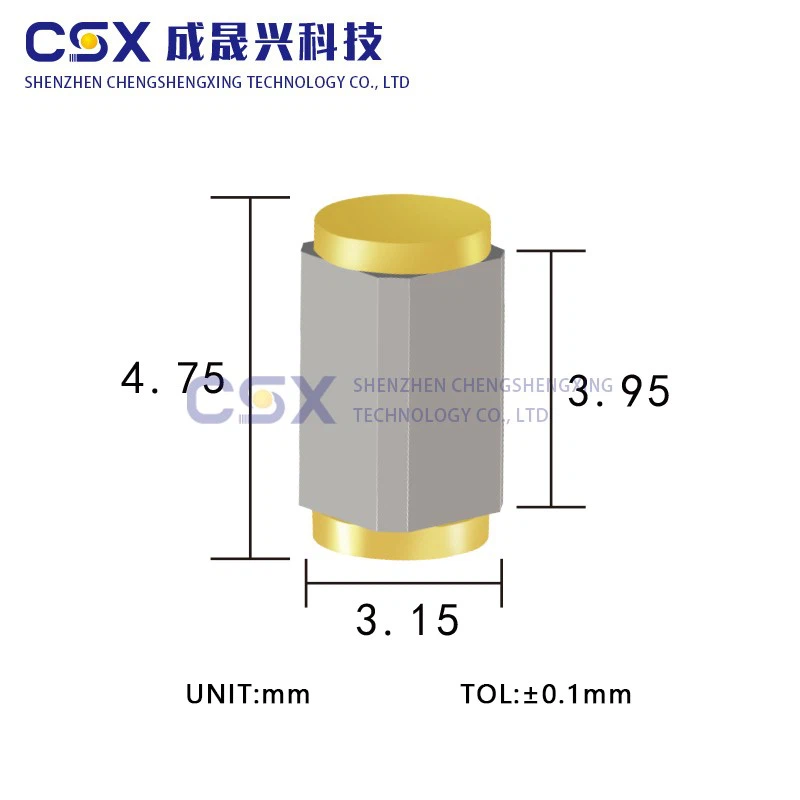

Regular maintenance and calibration of the sensors are also important to ensure their accuracy and reliability. By regularly checking and calibrating the sensors, any potential issues caused by shock can be detected and corrected in a timely manner.
Our Products and Their Resistance to Shock
At our company, we offer a wide range of inclinometer tilt sensors that are designed to withstand shock and provide accurate measurements in various environments. Our Omnidirectional Tilt Angle Detection Switch CSX - SEN - 660B is a high-quality sensor that is built with shock-resistant features. It uses advanced technology to provide accurate tilt measurements even in the presence of shock.
The Roll Ball Sensor Switch BTS45 is another product in our portfolio. It is designed with a robust mechanical structure that can withstand high levels of shock. This sensor is suitable for applications where shock resistance is a critical requirement.
Our Switching Components CSX60 are also engineered to be shock-resistant. They are used in conjunction with our inclinometer tilt sensors to provide reliable switching functions. These components are designed to ensure the proper operation of the sensors even in harsh environments.
Conclusion
In conclusion, shock can have a significant impact on the performance and reliability of inclinometer tilt sensors. However, by understanding the factors that affect the susceptibility to shock and implementing appropriate mitigation strategies, it is possible to minimize the effects of shock and ensure the accurate and reliable operation of the sensors.
As a supplier of Inclinometer Tilt Sensors, we are committed to providing high-quality products that are designed to withstand shock and provide accurate measurements. If you are interested in our products or have any questions about the impact of shock on inclinometer tilt sensors, please feel free to contact us for further information and to discuss your specific requirements. We look forward to working with you to meet your sensing needs.
References
- [1] "Accelerometer and Gyroscope Basics," Sensor Technology Handbook, 3rd Edition.
- [2] "Design Considerations for Shock-Resistant Sensors," Journal of Sensors and Actuators.
- [3] "Testing and Evaluation of Inclinometer Tilt Sensors under Shock Conditions," International Journal of Measurement and Instrumentation.


