As a supplier of Unidirectional Tilt Switches, I understand the importance of protecting these devices from over - current. Over - current can cause significant damage to the switch, leading to malfunctions, reduced lifespan, and potential safety hazards. In this blog post, I will share some effective strategies to safeguard Unidirectional Tilt Switches from over - current situations.
Understanding the Risks of Over - Current
Before delving into the protection methods, it's crucial to understand why over - current is a problem for Unidirectional Tilt Switches. These switches are designed to operate within a specific current range. When the current exceeds this range, it can generate excessive heat. The heat can damage the internal components of the switch, such as the contacts, wiring, and the sensing mechanism. Over time, this damage can lead to intermittent operation, false triggering, or complete failure of the switch.
Fuse Protection
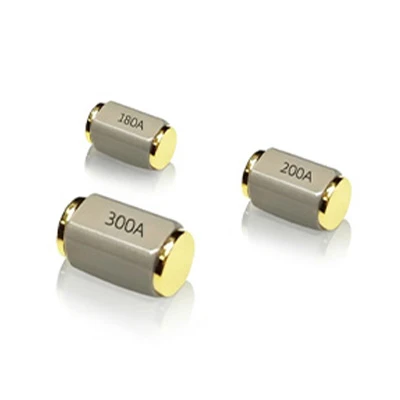
One of the most common and effective ways to protect a Unidirectional Tilt Switch from over - current is by using fuses. A fuse is a simple yet reliable device that acts as a sacrificial element in the electrical circuit. It contains a thin wire that melts when the current flowing through it exceeds a certain value, known as the fuse rating.
When selecting a fuse for a Unidirectional Tilt Switch, it's essential to choose a fuse with an appropriate rating. The fuse rating should be slightly higher than the normal operating current of the switch but lower than the current level that could cause damage. For example, if the Unidirectional Tilt Switch Unidirectional Tilt Switch S07 has a normal operating current of 0.5A, a fuse with a rating of 0.75A or 1A might be suitable.
Fuses come in different types, such as fast - acting and slow - acting fuses. Fast - acting fuses respond quickly to over - current situations and are suitable for protecting sensitive components. Slow - acting fuses, on the other hand, can withstand short - term current surges without blowing, which is useful in circuits where there are normal inrush currents.
Circuit Breakers
Circuit breakers are another option for over - current protection. Unlike fuses, which need to be replaced after they blow, circuit breakers can be reset. They work by automatically opening the circuit when the current exceeds a preset value.
There are two main types of circuit breakers: thermal and magnetic. Thermal circuit breakers use a bimetallic strip that bends when heated by the over - current. This bending action causes the circuit breaker to open the circuit. Magnetic circuit breakers, on the other hand, use an electromagnet. When the current exceeds the rated value, the magnetic field generated by the electromagnet is strong enough to trip the breaker.
For Unidirectional Tilt Switches, a circuit breaker can provide reliable protection. It can be especially useful in applications where frequent over - current events occur, as it eliminates the need for constantly replacing fuses. However, it's important to select a circuit breaker with the right trip characteristics and rating to ensure proper protection of the switch.


Current - Limiting Resistors
Current - limiting resistors can also be used to protect Unidirectional Tilt Switches from over - current. A resistor is a passive electrical component that opposes the flow of current. By adding a resistor in series with the switch, the current flowing through the switch can be limited.
The value of the current - limiting resistor depends on the desired current limit and the voltage across the circuit. Ohm's law (V = IR) can be used to calculate the appropriate resistor value. For example, if the supply voltage is 12V and the maximum allowable current through the Tilt Roll Ball Switch CSX - SEN - 645A - D is 1A, a 12 - ohm resistor can be used.
However, it's important to note that using a current - limiting resistor can cause a voltage drop across the resistor, which may affect the performance of the switch. Therefore, careful consideration should be given to the power rating of the resistor and the impact of the voltage drop on the switch operation.
Monitoring and Control Systems
Implementing a monitoring and control system can also help protect Unidirectional Tilt Switches from over - current. These systems can continuously monitor the current flowing through the switch and take appropriate action if an over - current condition is detected.
For example, a current sensor can be used to measure the current. The sensor can send a signal to a microcontroller or a programmable logic controller (PLC). If the current exceeds a predefined threshold, the controller can trigger an alarm or take steps to reduce the current, such as shutting down the power supply to the switch.
In addition to over - current protection, monitoring systems can also provide valuable information about the operating conditions of the switch. This data can be used for predictive maintenance, allowing for timely replacement of components before a failure occurs.
Proper Installation and Wiring
Proper installation and wiring are often overlooked but are crucial for protecting Unidirectional Tilt Switches from over - current. Incorrect wiring can lead to short circuits or excessive resistance, which can cause over - current situations.
When installing the switch, it's important to follow the manufacturer's instructions carefully. The wires should be properly sized to handle the expected current. Using undersized wires can increase the resistance in the circuit, leading to over - heating and potential over - current.
In addition, the connections should be secure and free from corrosion. Loose connections can cause arcing, which can generate heat and increase the risk of over - current. Regular inspection of the wiring and connections can help identify and address any potential issues before they cause problems.
Conclusion
Protecting Unidirectional Tilt Switches from over - current is essential for ensuring their reliable operation and longevity. By using fuses, circuit breakers, current - limiting resistors, monitoring and control systems, and following proper installation and wiring practices, the risk of over - current damage can be significantly reduced.
If you are in the market for high - quality Unidirectional Tilt Switches or need more information on over - current protection, we are here to help. Our products, such as the Unidirectional Tilt Switch S07, Tilt Roll Ball Switch CSX - SEN - 645A - D, and Angle Transmitter X65, are designed to meet the highest standards of quality and performance. Contact us today to discuss your specific requirements and start a procurement negotiation.
References
- Electrical Engineering Handbook, Third Edition, edited by Richard C. Dorf.
- Handbook of Electronic Circuits and Components, by John Markus.
- Application Notes on Over - Current Protection from major semiconductor manufacturers.