


Hey there! As a supplier of unidirectional tilt switches, I often get asked if these nifty little devices can be used in industrial control systems. Well, the short answer is yes, but let's dive deeper into the details.
First off, what exactly is a unidirectional tilt switch? Simply put, it's a device that can detect the tilt or inclination of an object in a single direction. It's like a super - sensitive little angle detective. When the object reaches a certain tilt angle, the switch activates, sending a signal. This basic functionality might sound simple, but it has a ton of applications in industrial settings.
One of the key advantages of using a unidirectional tilt switch in industrial control systems is its reliability. Industrial environments can be harsh, with lots of vibrations, temperature variations, and dust. These switches are built tough to handle such conditions. For example, our Unidirectional Tilt Switch S07 is designed with high - quality materials that can withstand extreme temperatures and mechanical shocks. This means it can keep working accurately even in the most challenging industrial sites.
Another benefit is its simplicity. Unlike some complex sensors, a unidirectional tilt switch is easy to install and integrate into existing control systems. You don't need a team of engineers to figure out how to make it work. Just mount it in the right place, connect the wires, and you're good to go. This simplicity translates into cost - savings for industrial companies. They don't have to spend a fortune on installation and training.
Let's talk about some specific industrial applications. In the mining industry, for instance, tilt switches can be used to monitor the angle of conveyor belts. If a conveyor belt starts to tilt too much, it could cause material spillage or even damage the equipment. A unidirectional tilt switch can detect this tilt and send an alarm signal to the control room. Operators can then take immediate action to prevent any major problems.
In the construction industry, these switches are useful for monitoring the stability of cranes and other heavy machinery. Cranes need to be perfectly balanced to operate safely. A tilt switch can be installed on the crane to detect any abnormal tilting. If the tilt exceeds a safe limit, the switch can trigger an automatic shutdown of the crane, protecting the operators and the surrounding environment.

The manufacturing industry also benefits from unidirectional tilt switches. In assembly lines, they can be used to ensure that parts are being placed at the correct angle. For example, if a component needs to be inserted at a specific tilt, a tilt switch can verify this and stop the line if there's an error. This helps to improve the quality of the final product and reduce waste.
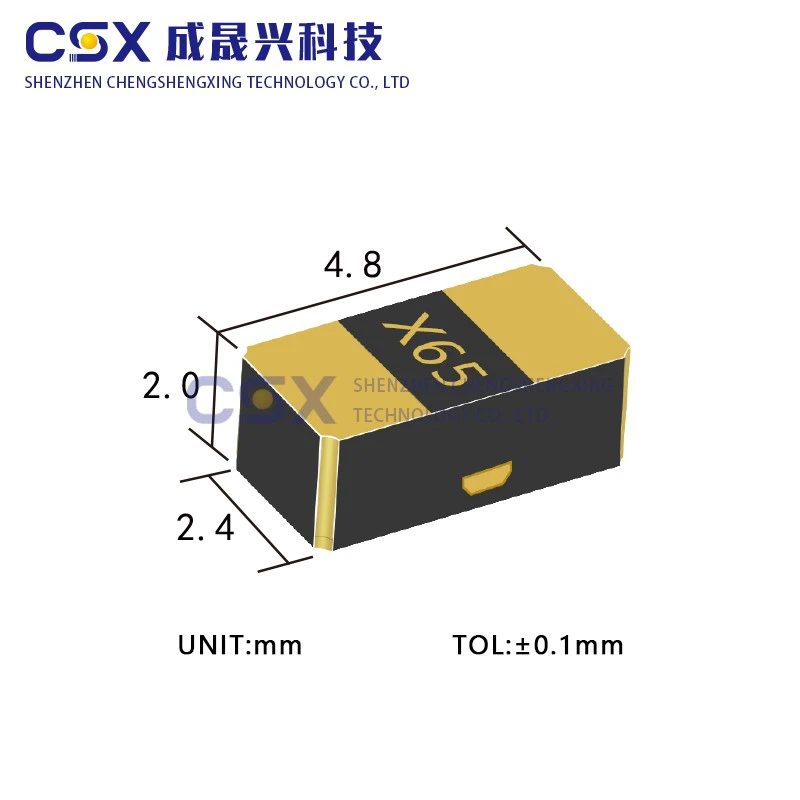
Now, let's compare unidirectional tilt switches with other types of sensors. One alternative is the Angle Transmitter X65. Angle transmitters can provide more precise angle measurements compared to tilt switches. However, they are also more expensive and complex. For applications where you just need to know if an object has tilted beyond a certain point, a tilt switch is a more cost - effective and straightforward solution.
Another related device is the Shock Sensor Motion Detection CSX - SEN - 350A. While shock sensors are great for detecting sudden impacts, they don't specifically measure tilt. A tilt switch, on the other hand, is focused on the angle of inclination. So, depending on your industrial control system requirements, you might need both types of sensors or just one.
Of course, like any technology, unidirectional tilt switches have their limitations. They are designed to detect tilt in a single direction, so if you need to measure tilt in multiple directions, you'll need to use multiple switches or a more advanced sensor. Also, the accuracy of the switch can be affected by factors like the mounting position and the presence of external magnetic fields. But with proper installation and calibration, these issues can be minimized.
In conclusion, unidirectional tilt switches are definitely a valuable addition to industrial control systems. They offer reliability, simplicity, and cost - effectiveness. Whether it's in mining, construction, or manufacturing, these switches can play a crucial role in ensuring the safety and efficiency of industrial operations.
If you're in the industrial sector and think a unidirectional tilt switch could be useful for your control system, I'd love to have a chat with you. We can discuss your specific needs and figure out the best solution for your business. Don't hesitate to reach out and start a conversation about procurement.
References
- General knowledge of industrial sensor applications
- Product specifications of Unidirectional Tilt Switch S07, Angle Transmitter X65, and Shock Sensor Motion Detection CSX - SEN - 350A


