


Do force transmitters need power supply? This is a question that often arises among engineers, technicians, and those involved in industrial applications. As a leading supplier of force transmitters, I've had the privilege of delving deep into this topic, and I'm excited to share my insights with you.
Understanding Force Transmitters
Before we explore the power supply requirements, let's first understand what force transmitters are. Force transmitters are devices that convert mechanical force into an electrical signal. They are widely used in various industries, including manufacturing, automotive, aerospace, and robotics. These devices play a crucial role in ensuring the accuracy and reliability of force measurement, which is essential for quality control, safety, and process optimization.
There are different types of force transmitters, such as strain gauge-based, piezoelectric, and capacitive. Each type has its own working principle and characteristics, which can influence the power supply requirements.
The Power Supply Debate
The question of whether force transmitters need a power supply is not a straightforward one. It depends on several factors, including the type of force transmitter, the application requirements, and the desired level of performance.
Force Transmitters That Require Power Supply
Most modern force transmitters, especially those based on strain gauge technology, require a power supply. Strain gauge force transmitters work by measuring the change in electrical resistance of a strain gauge when it is subjected to a force. To generate and measure this change in resistance, an external power supply is needed. The power supply provides the necessary voltage to the strain gauge bridge circuit, allowing it to produce an output signal proportional to the applied force.
In addition to strain gauge-based force transmitters, piezoelectric force transmitters also require power supply in most cases. Piezoelectric force transmitters generate an electrical charge when subjected to a force. However, to convert this charge into a usable electrical signal, signal conditioning circuitry is often required, which needs a power supply to operate.
The power supply for force transmitters can be either a direct current (DC) or an alternating current (AC) source. DC power supplies are more commonly used because they provide a stable and reliable source of power, which is essential for accurate force measurement. The voltage requirements of force transmitters can vary depending on the specific model and application, but they typically range from a few volts to several tens of volts.
Force Transmitters That Can Operate Without Power Supply
While most force transmitters require a power supply, there are some exceptions. For example, some simple mechanical force transmitters, such as spring-based force gauges, do not require an external power supply. These devices work by measuring the displacement of a spring when a force is applied. The displacement is then converted into a force reading using a calibrated scale.
However, these mechanical force transmitters have limitations in terms of accuracy, sensitivity, and the ability to provide digital output. In modern industrial applications, where high precision and real-time data are often required, electronic force transmitters that require power supply are more commonly used.
Factors Influencing the Power Supply Requirement
Application Requirements
The power supply requirement of a force transmitter is largely determined by the application requirements. In applications where high accuracy and sensitivity are required, such as in laboratory testing and calibration, force transmitters with power supply are usually preferred. These transmitters can provide more accurate and stable measurements compared to mechanical force transmitters.
On the other hand, in some simple applications where cost is a major concern and high accuracy is not critical, mechanical force transmitters without power supply may be a suitable choice. For example, in some basic manufacturing processes where a rough estimate of force is sufficient, a spring-based force gauge can be used.
Signal Output
The type of signal output required also affects the power supply requirement. Force transmitters can provide different types of output signals, such as analog voltage, current, or digital signals. Analog output signals are typically easier to process and can be directly connected to other analog devices. However, they may require a power supply to amplify and condition the signal.

Digital output signals, on the other hand, provide more accurate and reliable data transmission. They can be easily integrated with digital control systems and data acquisition devices. However, digital force transmitters usually require a power supply to operate the internal microcontroller and communication circuitry.
Our Force Transmitter Products
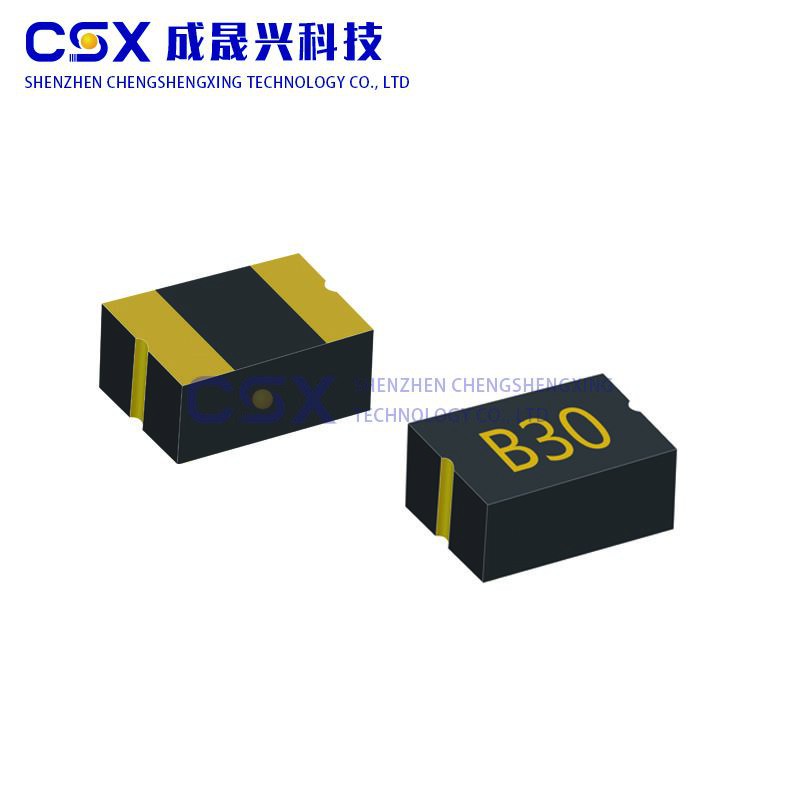
As a force transmitter supplier, we offer a wide range of products to meet different application requirements. Our Force Transmitters B30 are based on advanced strain gauge technology, which provides high accuracy and reliability. These transmitters require a power supply to operate, but they offer excellent performance in terms of measurement precision and stability.
In addition to the Force Transmitters B30, we also offer other related products, such as the Tilt Switch Power-off Protection S07D and the Angle Switch Angle Detection CSX-SEN-815A. These products can be used in conjunction with force transmitters to enhance the functionality and safety of your applications.
Conclusion
In conclusion, whether force transmitters need a power supply depends on various factors, including the type of force transmitter, the application requirements, and the desired level of performance. While some simple mechanical force transmitters can operate without power supply, most modern electronic force transmitters require a power supply to provide accurate and reliable measurements.

If you are in the market for force transmitters or related products, we invite you to contact us for more information. Our team of experts can help you select the right products for your specific application and provide you with professional technical support. We look forward to the opportunity to work with you and contribute to the success of your projects.

References
- "Force Measurement Handbook" by HBM
- "Industrial Sensors: Theory, Applications, and Troubleshooting" by David A. Bell


