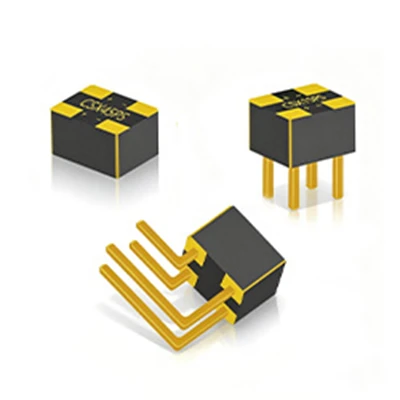
If you've ever found yourself needing a ball-rolling switch for a project – whether it's a DIY home automation build, a industrial safety sensor, a consumer electronics tweak, or even a robotics prototype – you've probably asked, "Where can I buy a ball-rolling switch that actually works, not just some cheap no-name part that dies after a few uses?" As a supplier who's been making these switches for years, I get it. The market's full of options, but not all ball-rolling switches are created equal. A lot of people settle for the first part they find on Amazon or a random electronics site, only to run into issues: inconsistent sensitivity, poor durability, flaky connections, or switches that only work in one direction (super annoying if your project needs omnidirectional detection).
Let's break this down. First, I want to make sure you know what a ball-rolling switch even does, because if you're new to these, that context matters. A ball-rolling switch (sometimes called a tilt switch, roll ball sensor, or contact ball sensor) uses a small conductive metal ball inside a sealed chamber. When the switch tilts or rolls, the ball moves, connecting two internal electrodes to complete (or break) an electrical circuit. That's the core function, but the quality hits different. Cheap switches often use loose balls that rattle even when you don't want them to trigger, or flimsy epoxy seals that crack if you drop them, leading to false triggers or total failure.
So where do you buy a ball-rolling switch that's reliable, fits your specific use case, and won't leave you stuck mid-project? Let's start with the obvious: specialized electronics component suppliers, especially those that focus on tilt and roll sensors. That's where I come in. As a supplier, I've seen a lot of buyers go for generic parts and regret it. Let's walk through the different types of ball-rolling switches we offer, because matching the right switch to your project is half the battle.
First up, the SMD Roll Ball Switch BT30. If you're working with surface-mount design (SMD) PCBs – you know, the tiny circuit boards used in phones, wearables, small consumer gadgets – this is your guy. SMD switches are compact, easy to solder onto PCBs, and perfect for space-constrained projects. The BT30 is omnidirectional, so it triggers no matter which way you tilt it, and it's a normally closed (NC) switch, which means the circuit is complete until you tilt it (that's useful for safety applications, like a device that shuts off if it falls over). A lot of DIYers and small manufacturers reach for this because it's small enough for a fitness tracker or a smart water bottle, but still durable enough for repeated use.
Next, if you need a slightly larger, more robust option, the Roll Ball Sensor BT45L is a solid pick. Wait, why L? That stands for low-profile? No, actually, it's longer in body length than some other models, which makes it easier to mount in devices where you don't want to risk damaging the internal chamber. The BT45L is still omnidirectional, NC, and works with through-hole soldering if you're not doing SMD. It's common in industrial equipment, like conveyor belt tilt sensors or small assembly line safety switches, because it can handle a bit more vibration than smaller SMD models. It's also more visible for mounting – you can see the sealed chamber easily, so it's hard to misplace during assembly.
Then there's the Ball-rolling Switch BT45U. This one's for applications where you need a bit more sensitivity, or maybe you're working with slightly higher voltage loads. The U here stands for "universal," right? It works in both through-hole and can even be adapted for some surface-mount setups if you use adapter boards. Unlike the BT30, which is super compact, the BT45U has a slightly larger ball chamber, so the ball has more room to move – that means it triggers at a smaller tilt angle (like just 15 degrees) compared to the BT30's 30 degrees. That's perfect for projects like a drone's crash detection system, or a portable speaker that pauses when it's tipped over. It's also sealed with a higher-grade epoxy, so it's water-resistant enough for outdoor use, as long as it's not submerged.
Wait, let's not skip the Contact Ball Sensor BT45. That's a bit different – this one's not just a tilt switch; it's designed to trigger only when the ball makes direct contact with both electrodes, not just when it's tilted. So if your project needs a switch that responds to physical contact or rolling over a surface, not just angle change, this is the one. For example, if you're building a game controller that detects when a ball is rolled into a certain position, or a package handling system that counts rolls, the BT45 will give you a more precise trigger. It's also available in through-hole, so it's easy to hand-solder if you're a hobbyist who doesn't have a reflow oven.
Now, I know you're thinking: "Okay, but why buy from a specialized supplier instead of Amazon or eBay?" Let's be real. On those sites, a $1 ball-rolling switch might seem like a steal, but 9 times out of 10, it's a knockoff. The conductive ball is made of cheap metal that corrodes after a few months, the seal fails so dust gets in, and the trigger angle is all over the place – one unit triggers at 10 degrees, another at 30 degrees. When you're building a product that needs consistent performance, that inconsistency is a dealbreaker. As a supplier, we test every switch before it ships: we check the trigger angle, test for corrosion, verify the seal is waterproof (or dustproof, depending on the model), and make sure the electrical connections are reliable. We also offer datasheets for every model, so you know exactly what voltage, current, and trigger angle you're getting – no guesswork.
Another big plus for buying direct from a supplier: customization. A lot of hobbyists and small manufacturers don't know that you can tweak these switches for specific use cases. For example, if you need a switch that triggers at a 5-degree angle instead of the standard 15, we can adjust the size of the internal chamber. If you need it to be normally open (NO) instead of NC, we can modify that too – just let us know.
Wait, let's talk about where else you might find a ball-rolling switch, just to help you compare. There are general electronics distributors like Digi-Key or Mouser, right? But the problem there is that they stock generic models, not specialized ones tailored for tilt or roll detection. If you're making a medical device or a outdoor IoT sensor, a generic switch might not meet your IP rating requirements (IP65 for dust and water resistance, for example). We have models that meet those ratings, which is key for industrial or outdoor projects. Also, if you have a technical question – like which switch works best for your specific project – a specialized supplier will have someone who can help. I can't tell you how many times a customer has come to me saying, "I need a switch for my robot that triggers when it's flipped, but I don't want it to trigger when it's on a uneven surface" – and I can point them to the right model, or even suggest a modified version.
Let me give you a quick example of a project where picking the right switch mattered. A few months back, a guy reached out to us who was building a portable emergency radio that automatically turns on when it's picked up and tilted. He initially bought a cheap SMD switch from a big online retailer, but it kept triggering if he just jostled the radio in his bag – false triggers that killed the batteries. We recommended the Roll Ball Sensor BT45L, which has a slightly larger chamber so the ball only moves when you pick it up (jostling in a bag doesn't give enough consistent movement), and it was sealed to keep dust out. He ordered 1000 of them for his small production run, and later told us it's the only part of the radio that hasn't had any issues. That's the difference between a generic part and a specialized one.
Another thing to consider: lead times. If you're in a hurry for a project, a lot of big distributors have long lead times, but as a smaller specialized supplier, we can ship within 1-2 business days for in-stock models. All the switches I mentioned earlier – [SMD Roll Ball Switch BT30], [Roll Ball Sensor BT45L], [Ball-rolling Switch BT45U], and [Contact Ball Sensor BT45] – are in stock right now, so you don't have to wait weeks for them to arrive. That's a huge win when you're on a tight deadline for a trade show, a student project deadline, or a prototype for a Kickstarter launch.
Now, let's wrap this up. If you're looking for a ball-rolling switch, your best bet is to skip the no-name cheap parts and go with a supplier that specializes in these components. The models we offer are tested, reliable, and tailored for different use cases – whether you're doing SMD, through-hole, omnidirectional or contact-based triggers, indoor or outdoor use, small prototypes or larger production runs. We work with all types of customers, from hobbyists to small businesses, and we're here to help you pick the right switch for your project.


If you're ready to order, or just have questions about which model fits your needs, get in touch. We don't have a fancy storefront here, but we're here to help you find exactly what you need, no hidden fees, no minimum order headaches, and no flaky parts that let you down. Whether you need one sample to test or a thousand for a product launch, we've got you covered. Don't waste time and money on parts that won't work – reach out today, and we'll get your ball-rolling switch on its way.
References:
- Tilt Switch Industry Standards, Electronics Components Association, 2023
- Durability Testing of Miniature Roll Ball Switches, Journal of Industrial Electronics, 2022
- Surface-Mount Device (SMD) Component Mounting Guidelines, International Electrotechnical Commission (IEC), 2021